

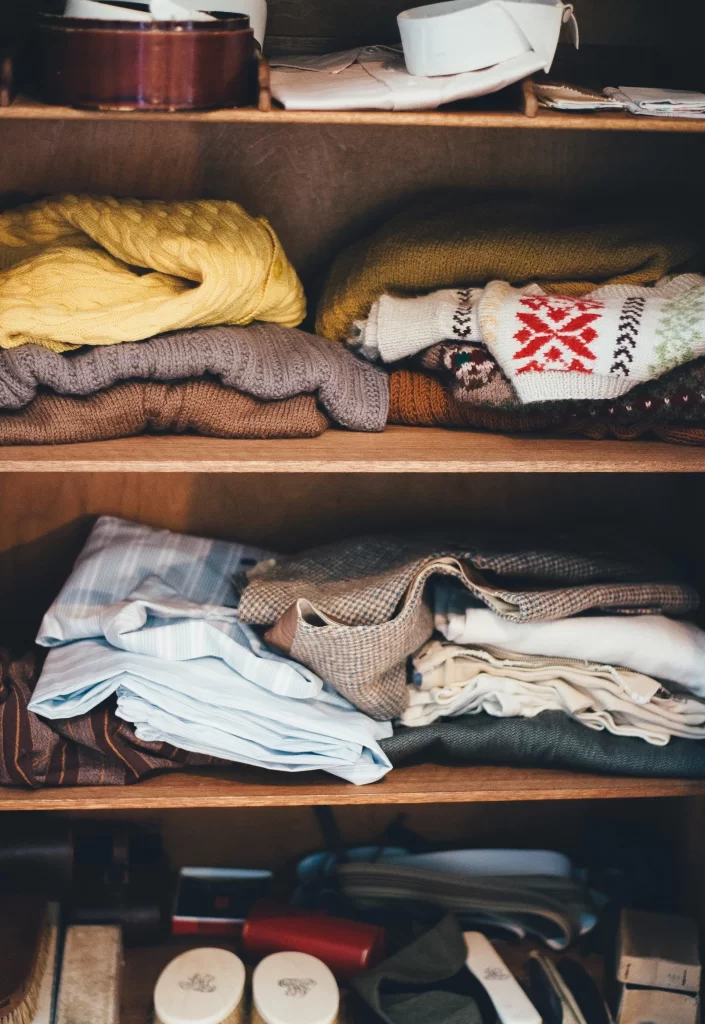
How long do you think you spend looking for a certain shirt, or finding pants that aren’t wrinkled, or pairing together matching socks and finding the right undergarments? If you are like most of us, you likely spend about 10 minutes a day searching for something related to your outfit. Lost time is often associated with any of the following: having large amounts of clothing, not having enough varied storage, having a wardrobe that isn’t put away, and being unaware of your inventory and its placement.

Many of us separate our clothing by season – which is a great start for removing unneeded items from season to season, but it is not enough to reduce our daily lost time. There are other separation rituals for storing like-things together so that we know where to find our separates, and more importantly, exactly where to put them away.
We advocate for a much broader separation ritual that is paired off into zones. First we separate work clothes from everyday wear. And we separate evening wear and special occasion clothing. Evening wear and work dresses are best kept in an area of the closet that supports long-hang. Since these items are worn infrequently, occasional wear may also go into a guest room closet if there is not enough space in your master closet.
In the master closet, if you have only a single hang bar, you can separate work clothing and casual wear with hang bar tags or simply choose the left of the right sides. If you have double hang closet rods, skirts and work pants should be kept together on the bottom row, while work blouses, shirts, blazers and layering tanks should have their own area on the top bar. As a side note: if you don’t have to keep a separate work wardrobe, you can still separate your casual wear by identifying better wear from house-comfortable in the same way.
For casual pants like jeans or leggings, you will need to decide if these are going to be hung or folded. We like open shelving for everyday wear items such as this for easy in and out.
The other zones beyond Work/Casual/Occasional include the following:
1. Active wear
2. Lounge wear
3. Sleep wear
4. Undergarments
5. Layering tanks and tops
6. Accessories like scarves, belts and ties
7. Handbags and other bags
8. Shoes and boots
In general, the first 4 zones on the above list are best kept in drawers or folded on open shelving. For best results, keep tops separated from bottoms in each zone category. When it comes to undergarments, these drawers needs special attention. Underwear, bras and socks should all be separated if possible. Bras should be further separated by color (nudes, white, dark, black) and style (front closure, back closure, strapless, workout and wireless). Socks may also require their own drawers. Footies, hosiery and tights may be separated, from workout socks, and from casual socks and trouser socks. Most people claim that finding sock partners is one of the biggest time takers in the morning!
Scarves can be great hung or kept in baskets or drawers. Do make sure to separate these by season (color and material). For belts there are excellent products on the market that allow for hanging. Again, consider separating work from everyday wear. The handbag zone is best for open shelving, as are shoes and boots. Shoes can be separated by Dress, Work, Casual – and lend well to coordination by color and by heel size.
Do any of these categories sound relevant to you? Are you ready to get into the zone? Separation is key to finding the items you want. We also believe in the time saving ritual of staging your outfit the evening before so you can be ready without a glitch. Happy zoning!
